
In the dynamic world of IT, technical expertise is only part of the equation. For solution architects, business soft skills are equally essential, particularly when navigating complex situations with limited technical context. Whether you’re leading a design conversation, managing client expectations, or facilitating critical decisions, your ability to communicate and adapt can make all the difference.
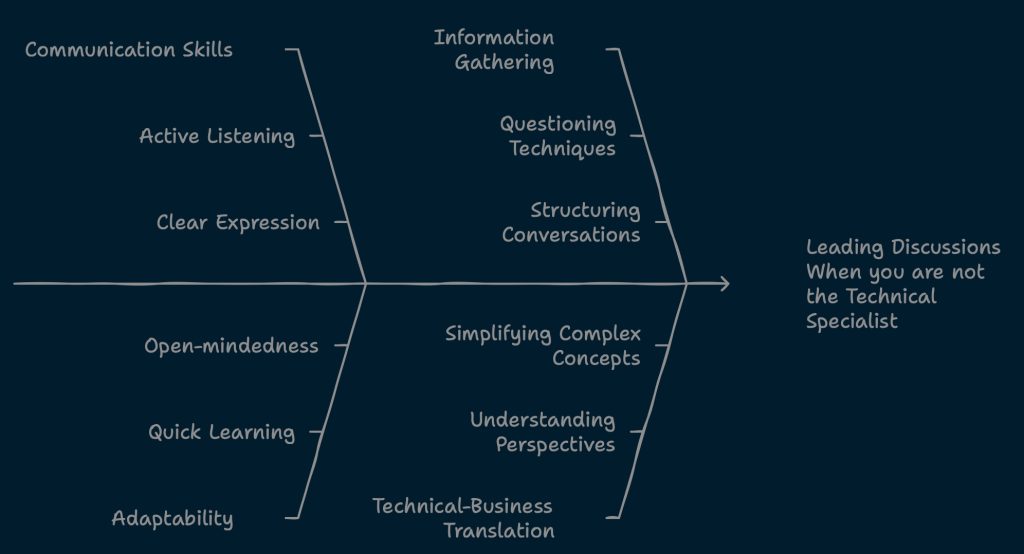
How can solution architects effectively gather information and lead discussions even when they’re not the technical specialist in the room? From asking the right questions to structuring conversations, there are some approaches we can use tips to excel in these potentially stressful scenarios.
Why Business Soft Skills Matter in IT
Solution architects often encounter situations where technical details are unclear or incomplete. For example:
- Speculative Pre-Sales Meetings: Engaging with clients in the early stages of solution planning.
- Unbriefed Situations: Entering a discussion without prior scope or topic definition.
- Crisis Resolution: Addressing architectural concerns following a major outage.
In such cases, success hinges on the ability to:
- Provide structure to conversations.
- Gather relevant business and technical information.
- Lead discussions despite being the least informed person in the room.
- Translate between technical and business perspectives.
How to Approach the Unknown
Feeling unprepared can be daunting, but developing a standard approach to quickly add value helps, for example,
1. Establish a Logical Process
- Frame the discussion around business problems and current state.
- Deconstruct the solution into platform layers.
2. Facilitate Collaboration
- Encourage specialists in the room to share their insights.
- Act as the bridge between technical teams and business stakeholders.
3. Focus on Business Impact
- Reframe technical issues as business outcomes.
- Highlight risks, constraints, and potential gains.
4. Document Outputs
- Summarize discussions into tangible deliverables like diagrams, requirements lists, and follow-up actions.
Sample Checklist for Solution Architects
Use this checklist to guide conversations and ensure critical points are addressed:
| Question | Purpose |
|---|---|
| What is the use case? | Understand business drivers and the appetite for change. |
| What does success look like to you? | Define the vision and business problem. |
| How critical is this process to your business? | Gauge the impact and identify priority areas. |
| Can you walk me through the process? | Map out user journeys and end-to-end workflows. |
| What data or system dependencies exist? | Validate integrations and identify potential bottlenecks. |
| What happens if this process fails? | Assess risk tolerance and disaster recovery measures. |
| Do you have compliance requirements? | Account for standards like PCI or ISO-27001. |
| Are there licensing or renewal considerations? | Highlight cost-saving opportunities or upcoming changes. |
| Who are the key stakeholders? | Identify decision-makers and specialists for follow-up. |
| What is the current scale and expected growth? | Plan for scalability and resource allocation. |
| How is the platform maintained and monitored? | Understand capacity utilization and operational insights. |
Tips for adding value as an architect
- Prepare for the unknown with methods and processes
- Remain logical and understand go-to designs and patterns, but remain adaptable.
- Scope existing business and technical decisions to qualify, and guide.
- Enable Collaboration
- Frame questions to prompt technical specialists to share their expertise.
- Facilitate a shared understanding between business and technical teams.
- Document and Follow Up
- Provide clear outputs, such as:
- One-page summaries.
- Conceptual diagrams.
- Lists of requirements, risks, and constraints.
- Send follow-up communications with key dates and action items.
- Provide clear outputs, such as:
Mastering business soft skills enables solution architects to thrive in ambiguous & fast-paced environments.
By focusing on structured processes, collaborative discussions, and clear documentation, a solution architect can add immediate value—even when technical specifics are undecided.